


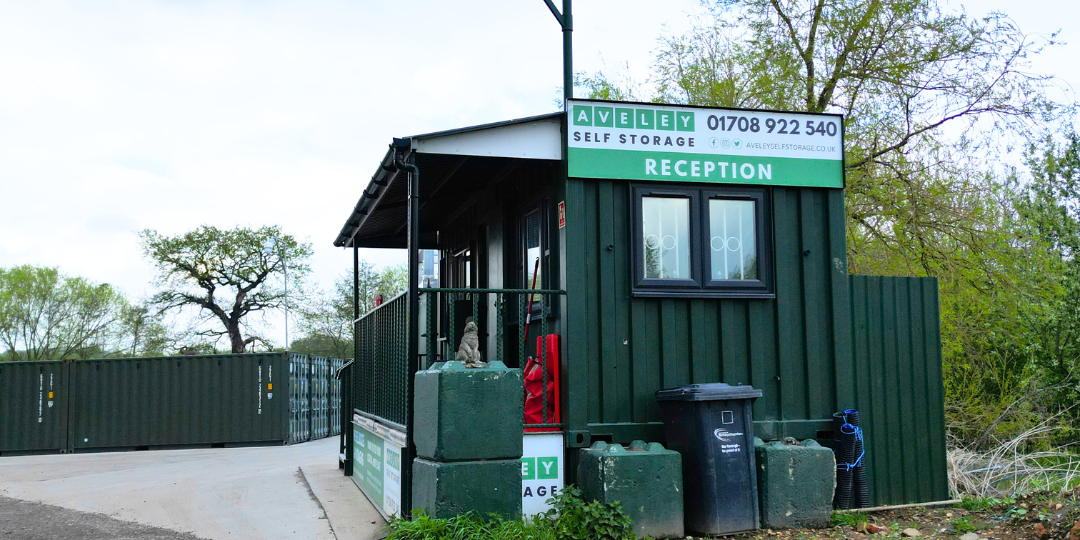
Self Storage Insurance and Valuables: What You Need to Know Before You Store
Most self storage providers require the customer to arrange their own contents insurance rather than covering belongings automatically, and most home insurance policies either exclude items kept in storage or limit that cover to a short window. Jewellery, cash and original documents are usually capped or excluded outright, whichever policy is used, so checking the detail before you book matters more than most people realise.
Self Storage Insurance and Valuables: What to Check Before You Book
- Storage contracts almost always make insurance a condition of renting a unit, not an optional extra, whether that means buying a dedicated policy or proving cover is already in place.
- Home contents policies typically only extend cover away from the property for a short period, sometimes as little as seven days during a move, occasionally up to thirty, rarely for a full storage booking.
- Single item value caps on general contents policies commonly sit between £1,500 and £2,500 unless a more valuable item is specifically listed.
- Cash, bullion and, in most cases, original legal documents are excluded from cover altogether, regardless of insurer or storage provider.
- Ask what insurance options or requirements apply before booking a unit at Aveley Self Storage rather than assuming, since this varies between providers.
What Does Self Storage Insurance Actually Cover?
Self storage insurance is contents cover for belongings physically inside a rented unit, separate from any insurance the operator holds on the building, container or site. That distinction is the root of most confusion: a storage business typically insures its containers, fencing and land against structural loss, but the customer’s own possessions are a different risk, and cover for them is usually the customer’s responsibility.
A typical storage contents policy responds to fire, theft involving forced entry, flood, storm damage and sometimes accidental damage in handling. It works like home contents insurance, just applied to a different address. Some policies are sold by the storage provider as an add on, others arranged independently, and some customers rely on an extension to an existing home policy. None is universal, which is why the question needs asking rather than assuming.
Do You Need Insurance for Self Storage in Aveley and South Ockendon?
There is no UK law forcing a private individual to insure their own possessions, in the way motor insurance is a legal requirement for driving. What is close to universal is a written condition in the storage contract itself requiring the customer to hold insurance, whether a policy bought through the provider or independent cover the customer can evidence.
A term like this is generally enforceable, provided it is written clearly and brought to the customer’s attention rather than buried in small print, a standard the Consumer Rights Act 2015 sets out for consumer contract terms. For anyone storing across Aveley, South Ockendon, Thurrock or the wider coverage area, the practical step is simple: ask what insurance options or requirements apply when you book, rather than assuming.
Does Home Contents Insurance Cover Self Storage? Why Most Policies Fall Short
Many people assume that because a sofa is insured sitting in the living room, it stays insured once loaded into a van and moved into a rented unit. In practice, that assumption is usually wrong, and it is the most common and costly misunderstanding in this whole topic.
Home contents policies are underwritten against a specific address named on the schedule. Anything not principally kept there falls outside standard cover unless a named extension applies. The two that turn up most often are temporary removal, covering goods away from home for a defined number of days, and a dedicated storage clause, usually with its own lower sub limit. Some insurers extend cover for as little as seven days during a move, others allow up to thirty, but very few match how long people actually use a storage unit for, which tends to run considerably longer than a single house move.
Why Home Insurers Restrict Cover for Items in Self Storage
A home insurer prices a policy against the security profile of one named address: locks, alarm, occupancy pattern, claims history. Once goods move to a building the insurer has never assessed, that pricing no longer reflects the real risk, so insurers either exclude the situation or apply a much lower limit rather than extend open ended cover to an unknown site.
This is also why a well run, secure storage site does not automatically restore full home cover, however many cameras it has or however good its reviews. The exclusion is about the insurer’s own risk assessment of a building it has not surveyed, not a judgement on how secure that site actually is.
Self Storage Insurance vs Home Contents Insurance: The Real Differences
| Feature | Home contents insurance | Dedicated self storage insurance |
|---|---|---|
| Where cover applies | The named address on the policy schedule | Any storage unit or site named on the policy |
| Typical time limit away from home | Often 7 to 30 days under a temporary removal clause | Runs for the length of the storage contract |
| Typical single item cap | Commonly £1,500 to £2,500 unless separately listed | Often tiered, commonly £2,500 up to around £7,500 |
| Common exclusions | Cash, bullion, often documents, vehicles, business stock | Cash, bullion, often documents, vehicles, business stock |
| How it is arranged | An extension agreed with an existing home insurer | Bought directly, through the provider, or standalone |
The exclusion list looks almost identical on both types of policy because cash, bullion and most original documents are excluded on general insurance grounds, not because one product is stricter than the other.
How Much Does Self Storage Insurance Cost? The Real Arithmetic
Dedicated storage insurance is commonly priced against the declared value of what is stored, often calculated per £1,000 of cover, rather than the physical size of the unit. Roughly doubling the declared value roughly doubles the premium, whichever provider is involved.
Working through what that means by unit size: a 5ft unit holding a few boxes and a dismantled single bed might carry a realistic declared value of a few hundred pounds up to around £1,000. A 10ft unit holding one full room, a sofa, a wardrobe, several boxes, commonly runs to £2,000 to £5,000. A 20ft unit holding most of a two or three bedroom house often reaches £8,000 to £15,000 once furniture and white goods are totalled honestly. A 40ft unit used for a full house move or business stock can comfortably exceed £20,000.
The arithmetic only works if the declared figure is realistic. Under declaring to shave a small amount off the premium is a false economy, since most policies cap a payout at the declared value, not the true replacement cost. Over declaring wastes premium on cover never called on. Neither error is obvious until a claim is made, the worst possible time to discover it.
Self Storage Insurance Value Limits: What Counts as a High Value Item
A high value item, in insurance terms, is anything whose replacement cost exceeds the per item limit written into the policy, and that threshold varies by product. On general contents style cover it commonly sits between £1,500 and £2,500. On dedicated, tiered storage products, higher tiers sometimes push the limit to around £5,000 to £7,500, still a cap rather than an open ended figure.
Anything above the relevant threshold typically needs listing on the policy, described and often supported by a valuation or receipt, before it is covered for its full worth. Without that step, a claim on an unlisted item is usually paid out only up to the blanket limit, not its actual value, exactly the shortfall that catches people out after a genuine loss.
Items Commonly Excluded From Self Storage Insurance
Regardless of provider or tier, certain categories are excluded from almost every contents or storage policy:
- Cash, cheques, bullion and precious metals not fashioned into finished jewellery
- Stocks, shares, bonds and financial instruments in their own right
- Most original irreplaceable documents: passports, birth and marriage certificates, wills, property deeds
- Items of pure sentimental value with no fixed market price, such as one off family photographs with no backup
- Livestock, plants and perishable food
- Hazardous, flammable or explosive substances, including fuel and gas canisters
- Unlicensed or illegal items
- Vehicles, which generally need their own specific motor policy rather than general contents cover
Storing Valuables in Self Storage: Jewellery, Cash and Precious Items
Jewellery sits in an awkward middle ground. It is legal, common and genuinely valuable, but most policies only cover it up to the per item or per category limit already covered above, and many require a valuation certificate before adding a higher value piece to the schedule. An engagement ring or family watch worth £4,000, stored without being separately listed, is very likely underinsured by half or more if it is ever lost or damaged.
Cash and bullion sit outside that middle ground entirely. They are excluded almost universally, across every tier and every provider, so a storage unit is never the right place to keep notes, coins or unworked precious metal, whatever the insurance on offer looks like on paper.
Where valuables genuinely are stored, at home or in a unit, Essex Police’s advice on marking and recording property is worth following: photograph jewellery with something for scale, note serial numbers, and keep receipts and valuations safe. None of that replaces insurance, but it is exactly the evidence an insurer will ask for at claim stage.
Storing Important Documents in Self Storage: What Should Stay at Home
Original wills, property deeds, passports and birth or marriage certificates fall into a category that self storage, insured or not, is simply the wrong home for. These are documents needed at short notice, legally significant in a way that is hard to replace, or both. A will in particular has an official alternative: it can be stored securely with the Probate Service for a small one off fee, removing the risk of it being lost or forgotten about years later.
Bulk business paperwork is a different case. Historic invoices, HR files and old accounts that a business must retain but rarely needs to access quickly are exactly what a proper document archive storage unit is designed for. The distinction that matters is between a small number of irreplaceable originals, which should stay with a solicitor or official scheme, and a large volume of records that must be retained but are not individually irreplaceable, a legitimate and common use of self storage.
Self Storage Insurance for House Movers and Homeowners
House moves are the most common reason people first look into self storage insurance, and the situation where the home policy gap catches people out most often. A family selling a three bedroom house in South Ockendon before their onward purchase completes might need to store a full house of furniture for four to six weeks between exchange and moving in, a gap that frequently runs longer than a typical seven to thirty day temporary removal extension, leaving dedicated storage cover as the only real protection.
The practical check is to see exactly when the home policy’s temporary removal extension starts and ends, compare it against the expected storage period, and treat any gap as uninsured until covered. Personal storage bookings spanning a moving chain, a renovation or a downsizing all carry this same risk, worth checking before the removal van is booked, not after.
Self Storage Insurance for Business Stock and Archived Documents
A business storing resale stock, trade tools or seasonal inventory is working with a different insurance product to a homeowner. Existing business contents or stock insurance may or may not extend to an off site unit, and that needs explicit confirmation from the business’s own insurer, not an assumption based on how home insurance works.
The arithmetic is worth doing properly too. A market trader or small ecommerce seller storing seasonal stock in a 40ft unit at a cost price of £15,000 needs that full figure declared, not the eventual retail value, since a contents policy insures replacement cost, not lost profit. For bulk paper archives, individual documents are rarely high value alone, but the volume, and often the confidentiality of HR or financial records, means a fire or flood loss carries a real reconstruction cost beyond the paper itself.
Self Storage Insurance for High Value Collections and Antiques
Someone storing a serious collection, fine art, antiques, instruments or classic memorabilia, sits outside what general self storage insurance was built for. Standard per item and per category caps, on a home extension or a dedicated storage tier, are exactly the kind of limit a single valuable antique will exceed immediately.
The honest recommendation here is specialist collectors’ or valuables insurance, with each significant item individually scheduled and professionally valued, arranged separately from a standard storage policy. In some cases the item is better suited to specialist storage entirely, whatever insurance is layered on top.
Choosing the Right Self Storage Insurance: A Suitability Matrix
| Situation | Typical declared value | Insurance approach that usually fits | Why | Wrong for |
|---|---|---|---|---|
| Short house move, standard furniture, a few weeks | Low to mid, roughly £2,000 to £8,000 | Check the home policy’s temporary removal extension first, top up with dedicated storage cover if the gap runs past it | A short, defined gap sometimes still sits inside an existing extension | Moves with an open ended or uncertain completion date |
| Long term household storage, renovation or downsizing over several months | Mid to high, roughly £5,000 to £20,000 | Dedicated storage insurance with an accurate, current declared value | Home policy extensions are built for weeks, not months | Anyone who has not reviewed the declared value since first booking |
| Business stock or ecommerce inventory | Wide range, often £5,000 to £30,000 or more | Business contents or stock insurance confirmed as covering an off site unit, or a dedicated commercial storage policy | Home and generic storage products are rarely designed around resale stock | Assuming personal storage insurance extends to a registered business’s stock |
| Bulk business document archive | High volume, low value per item | Business insurance covering the physical archive, plus attention to confidentiality and data protection | The risk is reconstruction cost and compliance, not item worth | Genuinely high value original documents such as wills or deeds |
| Genuinely high value valuables or collections | High, often above every standard per item limit | Specialist scheduled valuables or collectors’ insurance, each item separately valued | Standard caps exist specifically to exclude this category | Assuming any standard storage policy covers a single item above its limit |
What Should Never Go Into a Self Storage Unit, Insured or Not
Some categories should stay out of any self storage unit regardless of the insurance arrangement, because no policy covers them and, in several cases, storing them is unsafe:
- Cash, cheques and bullion, excluded from cover almost everywhere
- Original wills, property deeds and passports needed at short notice, better kept with a solicitor, a bank or an official scheme
- Perishable food, living plants or animals
- Hazardous, flammable or explosive substances, including fuel, gas canisters and fireworks
- Illegal or unlicensed items of any kind
- Irreplaceable items with no fixed market value and no backup, such as the only copy of a family photograph, far better digitised first
Alternatives to Self Storage for Genuinely High Value Valuables
Self storage is not the right tool for every category of possession, and it is worth naming the honest alternatives rather than pretending one product fits all:
- A bank or independent safety deposit box suits genuinely small, high value items such as heirloom jewellery or a handful of original documents, better protected in a vault than any storage container
- Lodging a will and deeds with a solicitor, or using the official Probate Service will storage scheme, removes the risk around a household’s most legally significant documents
- Digitising bulky paperwork, then shredding or securely retaining only what is legally required in physical form, cuts the volume that needs storing at all
- For serious collections, specialist fine art or collectors’ storage and insurance, arranged with a provider working specifically in that category
None of these are things Aveley Self Storage sells, and that is deliberate: for genuinely irreplaceable or ultra high value items, general self storage is honestly not the right answer, whatever insurance is arranged around it.
Common Self Storage Insurance Mistakes to Avoid
- Assuming home insurance carries over automatically, then discovering the exclusion only after a loss, when there is nothing left to do about it
- Under declaring stored goods to save a small amount on the premium, then finding a claim capped at that figure rather than the real replacement cost
- Storing a single high value item, a watch, an instrument, a piece of jewellery, without listing it separately, on the wrong assumption a headline cover limit applies per item rather than in total
- Leaving cash or excluded documents in a unit on the assumption that insured storage covers everything, when those categories are excluded almost everywhere
- Failing to update the declared value as more goes into a unit, so a policy taken out for a short move still shows the original, inaccurate figure months later
Self Storage Insurance Myths People Still Believe
Is Self Storage Insurance Worth It? Our Verdict
For most people using self storage, whether for a house move, a renovation or ordinary business stock, arranging specific storage cover, through the provider or independently, is worth the modest premium, because most home insurance was not written with an off site unit in mind. The gap between what people assume is covered and what is actually covered is where costly surprises happen, avoidable with a five minute check before moving day.
Where the line has to be drawn honestly is genuinely high value or irreplaceable items: jewellery above the standard per item cap, cash, original legal documents, fine art and serious collections. For that category, general self storage insurance is the wrong tool, and a specialist approach, scheduled valuables cover, a safety deposit box, solicitor storage, is the honest recommendation regardless of what any storage business would rather sell. The practical first step for anyone considering a unit at Aveley Self Storage is simply to ask what insurance options or requirements apply when you request a quote, so the right cover is confirmed before moving day.
Self Storage Insurance and Valuables: Frequently Asked Questions
1. Do I Need Insurance to Use a Self Storage Unit?
There is no general UK law forcing an individual to insure personal possessions, but almost every storage contract makes insurance a condition of renting a unit, whether through a policy bought from the provider or independent cover the customer can evidence. Check the specific requirement before booking, since it varies between businesses.
2. Will My Home Insurance Cover My Belongings in Self Storage?
Often only partially, or not at all. Most home policies are written against a named address, and any extension for goods kept away from home is usually limited to a short period, commonly seven to thirty days, rather than a full storage booking. Always check the wording directly with the insurer rather than assuming.
3. What Items Are Excluded From Self Storage Insurance?
Cash, cheques, bullion and unworked precious metals are excluded almost universally, alongside most original irreplaceable documents such as wills, deeds and passports, perishable goods, hazardous substances, illegal items and, usually, vehicles, which need their own motor policy.
4. Is There a Value Limit on Self Storage Insurance for a Single Item?
Yes, almost always. General contents style cover commonly caps a single item between £1,500 and £2,500, and dedicated tiered storage products sometimes allow higher limits, often up to around £5,000 to £7,500 on a higher tier, but a cap of some kind applies on essentially every product.
5. Can I Store Cash or Jewellery in a Self Storage Unit?
Jewellery can usually be stored and insured up to the relevant per item limit, provided anything valuable is specifically listed and, where required, supported by a valuation. Cash and bullion are excluded from cover on almost every policy, so they should not be kept in any self storage unit regardless of how the rest of the insurance is arranged.
6. Should I Keep My Will or Deeds in Self Storage?
No. Original wills and property deeds are better kept with a solicitor, a bank, or lodged with the official Probate Service will storage scheme, all designed for documents that must remain safe, findable and legally significant for years. Self storage, however secure, is not designed for that role.
7. Does Business Storage Need Different Insurance to Personal Self Storage?
Yes, in most cases. A business storing resale stock, tools or archived paperwork usually needs its own business contents or stock insurance confirmed as extending to an off site unit, since personal contents policies are rarely designed around commercial risk or stock values.
8. What Happens If I Under Declare an Item’s Value on My Self Storage Insurance?
Most storage and home insurance policies cap a payout at the value declared when the policy was taken out, not the true replacement cost of what was lost. Under declaring to reduce the premium is a common mistake that only becomes apparent at claim stage, when it is too late to correct.
3 Things Only Aveley Self Storage Can Answer
- What insurance options or requirements apply to a booking at Aveley Self Storage: is a customer required to prove their own cover, offered a specific product, or both?
- Is there a minimum declared value or excess that applies if Aveley Self Storage does offer or require a specific insurance arrangement?
- Are there any items Aveley Self Storage asks customers not to store at all, beyond the general exclusions covered in this guide?